How Often Should You Apply Zintrac 700? A Complete Guide Plus an Alternative with AMAZINC 395
Introduction
Zinc is one of the most important micronutrients required by crops. Although plants need only small quantities, zinc directly influences chlorophyll formation, enzyme activation, root development, flowering, fruit setting, grain filling, and overall crop productivity.
Among premium liquid zinc fertilizers, YaraVita Zintrac 700 has gained popularity because of its concentrated zinc formulation. However, one question repeatedly asked by growers is:
How often should you apply Zintrac 700?
The answer depends on crop type, deficiency severity, soil conditions, and application method. Applying zinc too early, too late, or too frequently may not provide optimum results.
In this guide, we'll explain:
- Recommended application frequency for Zintrac 700
- Factors affecting zinc application intervals
- Signs indicating another zinc spray is needed
- Best timing for foliar zinc sprays
- Common application mistakes
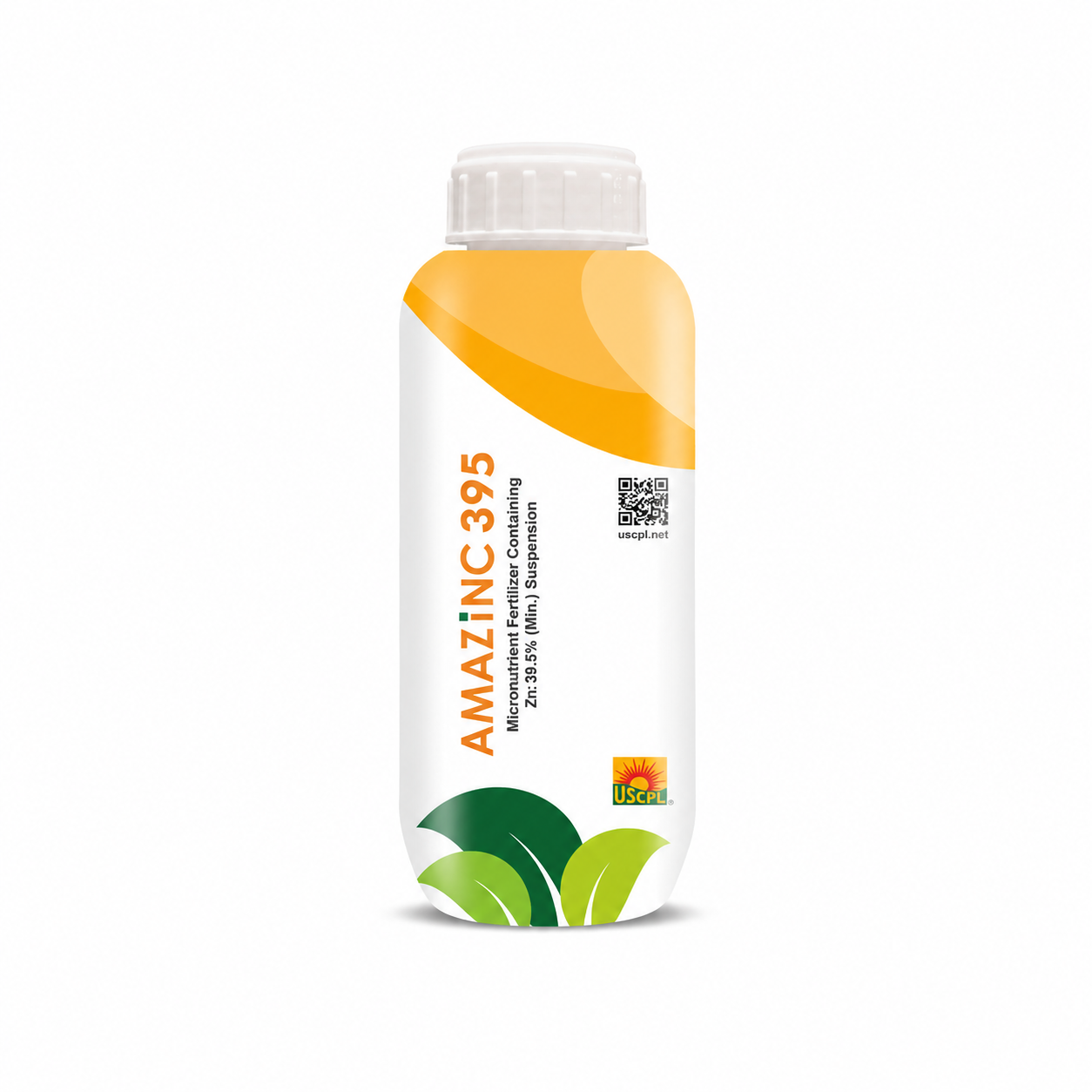
- An advanced alternative—AMAZINC 395, a Zinc Oxide 39.5% liquid zinc fertilizer designed for efficient crop nutrition.
Why Zinc Application Frequency Matters
Many growers believe applying more zinc means better crop growth.
That isn't true.
Plants absorb zinc only when needed. Excessive spraying increases costs without proportional benefits.
Correct application frequency helps:
- Maintain optimum zinc levels
- Prevent hidden deficiencies
- Improve nutrient balance
- Maximize fertilizer efficiency
- Reduce unnecessary spray expenses
Therefore, timing is often more important than quantity.
What is YaraVita Zintrac 700?
YaraVita Zintrac 700 is a highly concentrated suspension concentrate (SC) liquid zinc fertilizer designed primarily for foliar nutrition.
It delivers high zinc concentration while allowing lower spray volumes compared to conventional zinc products.
Common features include:
- High zinc concentration
- SC (Suspension Concentrate) technology
- Foliar application
- Suitable for multiple crops
- Quick correction of zinc deficiency
Because of its concentrated nature, proper dilution and timing are essential.
How Often Should You Apply Zintrac 700?
There is no universal answer.
Application frequency depends on crop demand.
Generally:
| Crop Stage |
Recommended Frequency |
| Early vegetative stage |
First application |
| Rapid growth stage |
Second application if required |
| Flower initiation |
Additional spray for high-demand crops |
| Fruit development |
Optional depending on deficiency |
Most crops require:
- 1–3 foliar applications during the season
Not every crop requires three sprays.
Healthy crops growing in zinc-sufficient soils may only require one application.
Factors Affecting Application Frequency
1. Soil Zinc Status
Low-zinc soils require more frequent supplementation.
High pH soils often reduce zinc availability.
Calcareous soils commonly need repeated foliar sprays.
2. Crop Type
Different crops remove different amounts of zinc.
High zinc-demand crops include:
- Maize
- Rice
- Cotton
- Soybean
- Sugarcane
- Citrus
- Grapes
- Tomato
- Chilli
- Onion
- Potato
Fruit and vegetable crops often require additional zinc sprays.
3. Deficiency Severity
Mild deficiency:
One corrective spray may be sufficient.
Moderate deficiency:
Two sprays are generally recommended.
Severe deficiency:
Multiple sprays at proper intervals may be necessary.
4. Rainfall
Heavy rainfall can:
- Reduce soil zinc availability
- Wash nutrients deeper into the soil
- Increase deficiency risk
Repeated foliar nutrition becomes more important.
5. Soil pH
Alkaline soils lock zinc.
Foliar application becomes the preferred correction method.
Ideal Time Between Zinc Sprays
Many agronomists recommend maintaining an interval of:
10–15 days
between foliar zinc applications.
This allows plants enough time to absorb and utilize applied zinc.
Spraying too frequently rarely improves results.
Best Crop Growth Stages for Zinc Application
Seedling Stage
Supports:
- Root establishment
- Early vigor
- Strong plant stand
Vegetative Growth
Critical for:
- Leaf expansion
- Chlorophyll production
- Stem development
Pre-Flowering
One of the most important timings.
Supports:
- Flower initiation
- Pollen development
- Better reproductive growth
Fruit Setting
Helps:
- Fruit retention
- Uniform fruit development
- Better quality
Symptoms That Indicate Another Zinc Spray May Be Needed
Watch for:
- Yellowing between veins
- Small leaves
- Short internodes
- Rosetting
- Delayed growth
- Poor flowering
- Reduced tillering
- Poor fruit development
If symptoms continue after the first spray, another application may be required.
Can Too Many Zinc Sprays Harm Crops?
Yes.
Excess zinc can interfere with uptake of:
Over-application may also:
- Increase production costs
- Cause nutrient imbalance
- Reduce fertilizer efficiency
Balanced nutrition always performs better.
Foliar vs Soil Zinc Application
Foliar Application
Advantages:
- Fast correction
- Higher nutrient use efficiency
- Immediate absorption
- Lower application rate
Best for:
- Standing crops
- Emergency correction
Soil Application
Advantages:
- Long-term availability
- Seasonal nutrition
- Foundation nutrient management
Best for:
- Basal application
- Zinc-deficient fields
Many successful farmers combine both methods.
Common Mistakes While Applying Liquid Zinc
Spraying During Midday
High temperatures reduce absorption.
Early morning or evening is preferable.
Incorrect Dilution
Always follow label recommendations.
Highly concentrated products require accurate dilution.
Mixing with Incompatible Products
Not every pesticide or fertilizer is compatible.
Always conduct a jar test before tank mixing.
Spraying After Severe Deficiency Appears
Preventive nutrition performs better than corrective nutrition.
Ignoring Crop Stage
Late application cannot fully recover lost yield potential.
What Makes a Good Liquid Zinc Fertilizer?
Modern agriculture requires more than simply adding zinc.
An ideal product should provide:
- High zinc concentration
- Excellent suspension stability
- Easy mixing
- Uniform spray coverage
- Consistent particle size
- Good crop safety
- Reliable performance
For growers looking for a modern Zinc Oxide 39.5% liquid zinc fertilizer, AMAZINC 395 offers an advanced solution.
It is developed as a premium Liquid Zinc micronutrient for efficient foliar nutrition across multiple crops.
Zinc Oxide 39.5% SC Formulation
AMAZINC 395 contains:
Zn Oxide 39.5%
in a high-quality suspension concentrate.
The advanced formulation promotes:
- Uniform dispersion
- Stable suspension
- Easy mixing
- Consistent application
Excellent Foliar Performance
As a premium Foliar Liquid, AMAZINC 395 provides:
- Uniform leaf coverage
- Better nutrient availability
- Efficient zinc delivery
- Reliable crop nutrition
Suitable for Multiple Crops
Recommended across:
- Tomato
- Chilli
- Onion
- Cotton
- Soybean
- Groundnut
- Rice
- Wheat
- Maize
- Citrus
- Grapes
- Pomegranate
- Vegetables
- Fruits
High Performance Liquid Fertilizer
AMAZINC 395 belongs to the new generation of High Performance Liquid Fertilizers designed for precision agriculture.
Key advantages include:
- High zinc concentration
- Excellent formulation stability
- Easy handling
- Reliable field performance
- Professional quality manufacturing
AMAZINC 395 vs YaraVita Zintrac 700
| Feature |
YaraVita Zintrac 700 |
AMAZINC 395 |
| Zinc source |
Concentrated liquid zinc |
Zinc Oxide 39.5% |
| Formulation |
Suspension Concentrate |
Zinc Oxide 39.5 SC formulation |
| Application |
Foliar |
Foliar |
| Crop suitability |
Multiple crops |
Multiple crops |
| Suspension quality |
High |
Advanced stable formulation |
| Leaf coverage |
Good |
Excellent |
| Micronutrient category |
Liquid Zinc |
Premium Liquid Zinc micronutrient |
Both products are designed to address zinc deficiency. Growers should evaluate factors such as formulation, compatibility, local availability, technical support, crop needs, and overall value when selecting the most suitable option.
How AMAZINC 395 Fits Your Zinc Nutrition Program
An effective seasonal zinc management plan may include:
First Spray
Early vegetative stage
Supports root establishment.
Second Spray
Rapid vegetative growth
Promotes chlorophyll production.
Third Spray
Before flowering
Supports reproductive development.
Fourth Spray (Optional)
Fruit development
Based on crop requirement.
Comparing AMAZINC 395 with Other Popular Zinc Brands
Today's growers evaluate several premium products before making a purchase.
Some commonly compared brands include:
Rather than selecting solely by brand name, compare:
- Zinc concentration
- Formulation technology
- Crop suitability
- Ease of mixing
- Technical support
- Product availability
- Cost-effectiveness
Frequently Asked Questions
Can Zintrac 700 be applied every week?
Weekly applications are generally unnecessary unless specifically recommended by an agronomist based on crop needs and deficiency severity. Most foliar zinc programs use longer intervals.
Is one zinc spray enough?
Sometimes yes.
High-value crops often benefit from multiple applications.
What is the best interval?
Generally:
10–15 days
depending on crop stage and deficiency.
Can AMAZINC 395 replace other liquid zinc fertilizers?
AMAZINC 395 is a premium Zinc Oxide 39.5% liquid zinc fertilizer that can be considered wherever growers are evaluating high-quality liquid zinc options. Product selection should be based on crop requirements, local recommendations, and agronomic advice.
Which crops benefit most?
Almost all crops respond to balanced zinc nutrition, particularly:
- Maize
- Rice
- Cotton
- Tomato
- Chilli
- Onion
- Grapes
- Citrus
Best Practices for Maximum Zinc Efficiency
- Test soil before planning zinc applications.
- Apply the first spray during early vegetative growth.
- Repeat only if crop demand or deficiency symptoms justify it.
- Maintain proper intervals between foliar sprays.
- Spray during cooler parts of the day.
- Use clean water and ensure good spray coverage.
- Follow label directions and local agronomic recommendations.
Conclusion
The answer to "How Often Should You Apply Zintrac 700?" depends on your crop, soil conditions, growth stage, and the severity of zinc deficiency. In most situations, one to three well-timed foliar applications during the season provide effective zinc nutrition, with intervals of around 10–15 days when repeat sprays are needed.
Modern agriculture also offers growers a wider choice of advanced liquid zinc fertilizers. AMAZINC 395, with its Zinc Oxide 39.5% SC formulation, is a strong option for farmers seeking a Liquid Zinc micronutrient that delivers reliable foliar nutrition across a broad range of crops. As one of the newer High Performance Liquid Fertilizers, it combines a concentrated Zn Oxide 39.5% formulation with excellent suspension stability and ease of application.
Whether comparing YaraVita Zintrac 700, Omex Zinc, Tradecorp Zinc, Van Iperen Zinc, or AMAZINC 395, the best choice is the one that aligns with your crop's nutritional needs, local agronomic recommendations, and long-term productivity goals.