YaraVita Zintrac 700 Technical Specifications Compared with AMAZINC 395
Introduction
Zinc is one of the most essential micronutrients required for healthy crop growth. Even though crops need zinc in relatively small quantities, its impact on plant metabolism, chlorophyll production, enzyme activation, flowering, fruit setting, and overall yield is enormous. Unfortunately, zinc deficiency has become increasingly common across agricultural soils worldwide, resulting in poor crop vigor, lower productivity, and reduced produce quality.
To overcome zinc deficiencies efficiently, growers increasingly rely on Liquid Zinc micronutrient fertilizers because of their superior absorption, uniform application, and quick plant response.
Among premium zinc fertilizers, YaraVita Zintrac 700 has earned recognition for its concentrated suspension technology. However, newer-generation products like AMAZINC 395 are offering similar high-performance benefits while delivering excellent value, advanced formulation stability, and outstanding field performance.
In this article, we'll compare YaraVita Zintrac 700 Technical Specifications with AMAZINC 395, helping growers understand the differences and choose the right High Performance Liquid Fertilizers for modern agriculture.
Why Technical Specifications Matter
Many farmers purchase fertilizers simply based on brand recognition.
However, agronomists know that technical specifications determine real field performance.
Important specifications include:
- Zinc concentration
- Zinc source
- Formulation technology
- Suspension stability
- Particle size
- Flowability
- Tank mix compatibility
- Crop safety
- Shelf stability
- Ease of application
Understanding these specifications helps growers maximize nutrient use efficiency while reducing unnecessary input costs.
Overview of YaraVita Zintrac 700
YaraVita Zintrac 700 is a premium Zinc oxide39.5 Sc formulation developed for foliar zinc correction.
It is widely used in:
- Cereals
- Cotton
- Maize
- Rice
- Sugarcane
- Vegetables
- Fruits
- Plantation crops
Its concentrated suspension technology allows a high zinc concentration while maintaining sprayability.
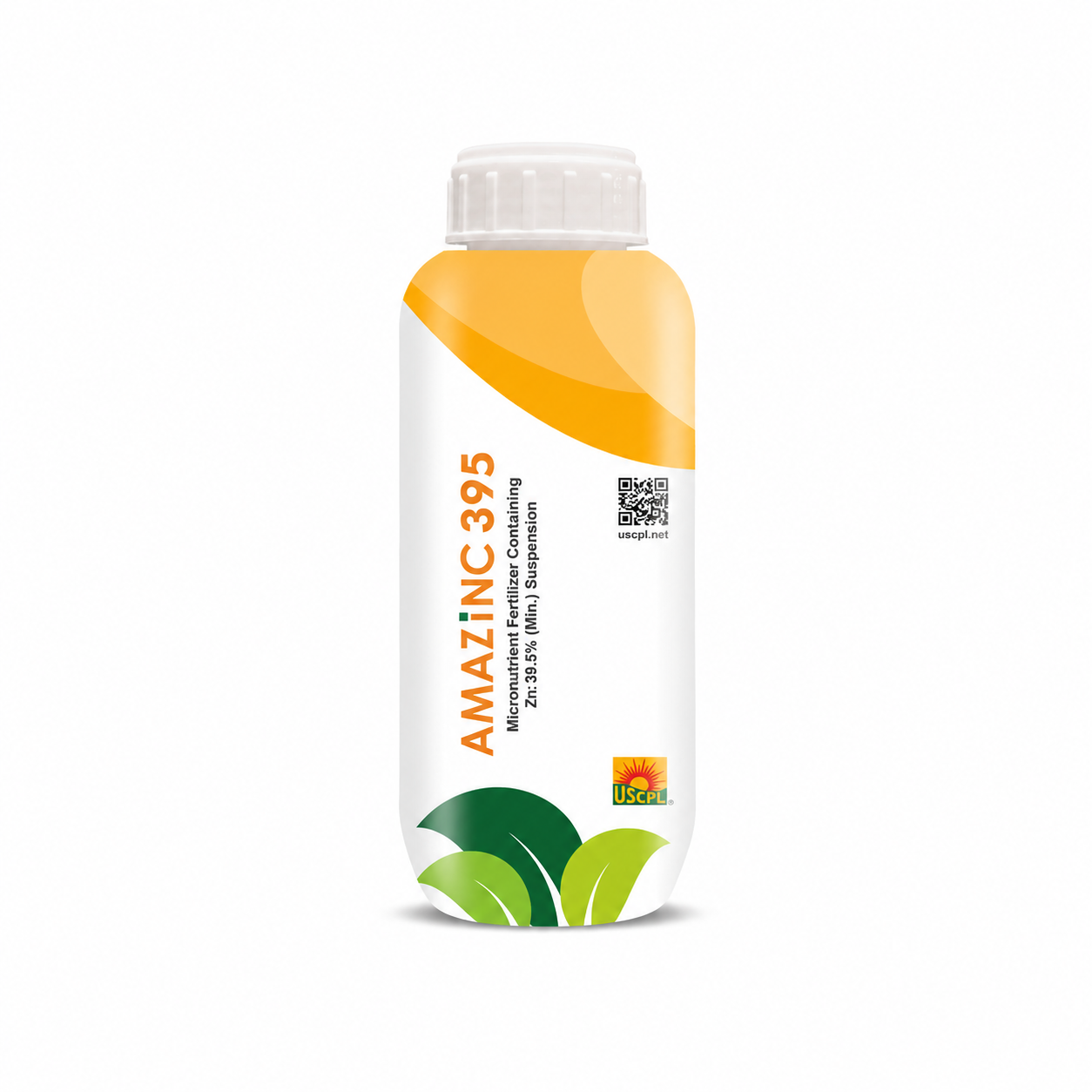
AMAZINC 395 is an advanced Zn Oxide 39.5% Suspension Concentrate (SC) fertilizer developed for rapid zinc correction and sustained crop nutrition.
Designed using advanced formulation technology, AMAZINC 395 offers:
- Excellent suspension stability
- Uniform particle distribution
- Better leaf coverage
- Improved absorption
- High compatibility
- Reliable field performance
It is suitable for:
- Foliar Spray
- Drone Spray
- Fertigation (where recommended)
making it one of today's most versatile Liquid Fertilizers.
Technical Specification Comparison
| Specification |
YaraVita Zintrac 700 |
AMAZINC 395 |
| Formulation |
Suspension Concentrate |
Suspension Concentrate |
| Zinc Source |
Zinc Oxide |
Zinc Oxide |
| Zinc Content |
High concentration |
Zn Oxide 39.5% |
| Physical Form |
Liquid SC |
Liquid SC |
| Suspension Stability |
Excellent |
Excellent |
| Crop Safety |
High |
High |
| Foliar Application |
Yes |
Yes |
| Uniform Coverage |
Excellent |
Excellent |
| Storage Stability |
High |
High |
| Easy Mixing |
Yes |
Yes |
| Suitable for Drone Spray |
Limited by local recommendations |
Yes |
| Modern SC Technology |
Yes |
Yes |
Both products utilize advanced Suspension Concentrate technology designed to maximize zinc delivery.
Understanding Zinc Oxide SC Formulation
One of the biggest strengths of both products lies in the Zinc oxide39.5 Sc formulation.
Unlike conventional soluble zinc fertilizers, Suspension Concentrates contain ultra-fine zinc oxide particles suspended uniformly within a liquid medium.
Advantages include:
- Higher nutrient concentration
- Better adhesion
- Reduced wash-off
- Improved leaf retention
- Longer nutrient availability
- Excellent spray distribution
AMAZINC 395 uses advanced suspension technology designed to maintain excellent flowability even after prolonged storage when properly shaken before use.
Why Suspension Stability Matters
High-solid Suspension Concentrates naturally experience slight settling during storage.
This is completely normal.
What matters is whether the formulation quickly redistributes after shaking.
High-quality SC formulations should provide:
- Fast redispersion
- No hard settling
- No lump formation
- Smooth pouring
- Consistent nutrient concentration
AMAZINC 395 demonstrates excellent re-suspendability, ensuring accurate nutrient delivery in every application.
Zinc Concentration and Crop Response
Higher zinc concentration means growers can supply sufficient micronutrients using lower product volumes.
Benefits include:
- Faster deficiency correction
- Improved chlorophyll formation
- Better photosynthesis
- Stronger root development
- Enhanced flowering
- Better fruit setting
- Improved grain filling
This makes Liquid Zinc micronutrient fertilizers particularly effective during rapid vegetative growth and reproductive stages.
Crop Benefits of Zinc Nutrition
Proper zinc nutrition influences almost every metabolic process inside plants.
Benefits include:
Better Root Development
Healthy roots absorb more nutrients and water.
Improved Chlorophyll Production
Leaves remain greener for longer periods.
Better Enzyme Activation
Hundreds of plant enzymes require zinc.
Improved Flower Initiation
Plants produce stronger flowering structures.
Better Fruit Set
Pollination efficiency improves.
Improved Grain Filling
Higher nutrient movement supports grain development.
Enhanced Plant Immunity
Balanced nutrition increases crop resilience against environmental stress.
Application Flexibility
Modern farming requires fertilizers that fit different application systems.
AMAZINC 395 supports:
- Foliar Spray
- Drone Application
- Modern precision spraying systems
This flexibility helps growers maximize operational efficiency while reducing labor requirements.
Spray Coverage Performance
Uniform spray coverage is critical for micronutrient efficiency.
Advanced SC formulations provide:
- Better droplet adhesion
- Uniform spreading
- Improved leaf retention
- Reduced runoff
- Better nutrient absorption
This enables crops to utilize a larger proportion of applied zinc.
Tank Mix Compatibility
Growers often mix micronutrients with:
- Fungicides
- Insecticides
- Bio-stimulants
- Water-soluble fertilizers
High-quality suspension concentrates should remain stable during tank mixing.
Always conduct a jar test before preparing large spray volumes and follow the product label recommendations.
Shelf Stability
Premium suspension concentrates should maintain:
- Uniform consistency
- Stable viscosity
- Easy shaking
- Smooth pouring
- No irreversible sedimentation
Proper storage extends product life and maintains consistent field performance.
Crop Suitability
Both products are suitable for many crops including:
Field Crops
- Wheat
- Rice
- Maize
- Cotton
- Soybean
Vegetable Crops
- Tomato
- Chilli
- Brinjal
- Onion
- Okra
- Cabbage
- Cauliflower
Fruit Crops
- Grapes
- Pomegranate
- Citrus
- Mango
- Banana
Plantation Crops
Why Growers Are Looking Beyond Traditional Brands
Today's growers evaluate fertilizers using multiple factors:
- Field performance
- Cost efficiency
- Product consistency
- Availability
- Technical support
- Ease of use
- Precision farming compatibility
As a result, many producers compare established products such as YaraVita Zintrac 700, Omex Zinc, Tradecorp Zinc, and Van Iperen Zinc alongside newer alternatives before making a purchase decision.
Why AMAZINC 395 Is Emerging as a Strong Alternative
AMAZINC 395 combines advanced formulation technology with practical usability.
Key advantages include:
✔ Zinc Oxide 39.5% SC formulation
✔ Excellent suspension stability
✔ Uniform particle distribution
✔ Superior flowability after shaking
✔ Better leaf coverage
✔ High crop safety
✔ Precision agriculture compatible
✔ Suitable for drone spraying
✔ Reliable storage stability
✔ Excellent value for modern farming
Best Practices for Using Liquid Zinc Fertilizers
To obtain maximum benefit:
- Spray during cooler parts of the day.
- Use clean water for mixing.
- Shake Suspension Concentrate products thoroughly before use.
- Maintain proper spray volume.
- Avoid spraying before heavy rainfall.
- Follow label recommendations for crop and growth stage.
- Test tank mixes before large-scale application.
Frequently Asked Questions
Is zinc oxide suitable for foliar application?
Yes. Modern Suspension Concentrate technology allows zinc oxide particles to be finely dispersed, improving foliar coverage and nutrient uptake.
Why should SC formulations be shaken before use?
Suspension Concentrates contain a high percentage of solid active ingredients. Mild settling during storage is normal, and shaking redistributes the particles for uniform application.
Can AMAZINC 395 be used with drone spraying?
Yes. AMAZINC 395 is designed to be compatible with modern application systems, including drone spraying, when used according to the product recommendations.
Is AMAZINC 395 a replacement for YaraVita Zintrac 700?
AMAZINC 395 serves as an alternative high-performance Zinc Oxide 39.5% SC fertilizer. The most suitable choice depends on factors such as crop requirements, agronomic advice, local availability, and label recommendations.
What crops benefit most from zinc application?
Almost all crops benefit where zinc deficiency exists, including cereals, vegetables, fruit crops, plantation crops, pulses, and oilseeds.
Final Thoughts
Both YaraVita Zintrac 700 and AMAZINC 395 are advanced Liquid Zinc micronutrient fertilizers built on Suspension Concentrate technology and intended to address zinc deficiencies effectively. Their shared focus on high zinc concentration, stable SC formulation, and foliar efficiency makes them suitable for a wide range of crops.
For growers seeking a Zn Oxide 39.5% Liquid Zinc Fertilizer with excellent suspension stability, modern application compatibility, and reliable field performance, AMAZINC 395 represents a compelling alternative worth evaluating alongside established brands. As with any crop nutrition product, selection should be based on crop needs, soil and tissue analysis, local agronomic guidance, and the manufacturer's application recommendations.