Yara Zintrac 700 Dosage per Acre: Application Guide and AMAZiNC 395 Alternative
Introduction
Zinc is one of the most important micronutrients required for healthy crop growth. Even though crops need zinc in small quantities, its deficiency can significantly reduce plant growth, flowering, fruit setting, grain filling, and ultimately yield.
Farmers across India and many other countries frequently search for the Yara Zintrac 700 dosage per acre because YaraVita Zintrac 700 has become one of the most recognized liquid zinc fertilizers in the market. However, dosage alone doesn't guarantee results. Proper crop stage, spraying technique, water quality, and product quality all influence nutrient uptake.
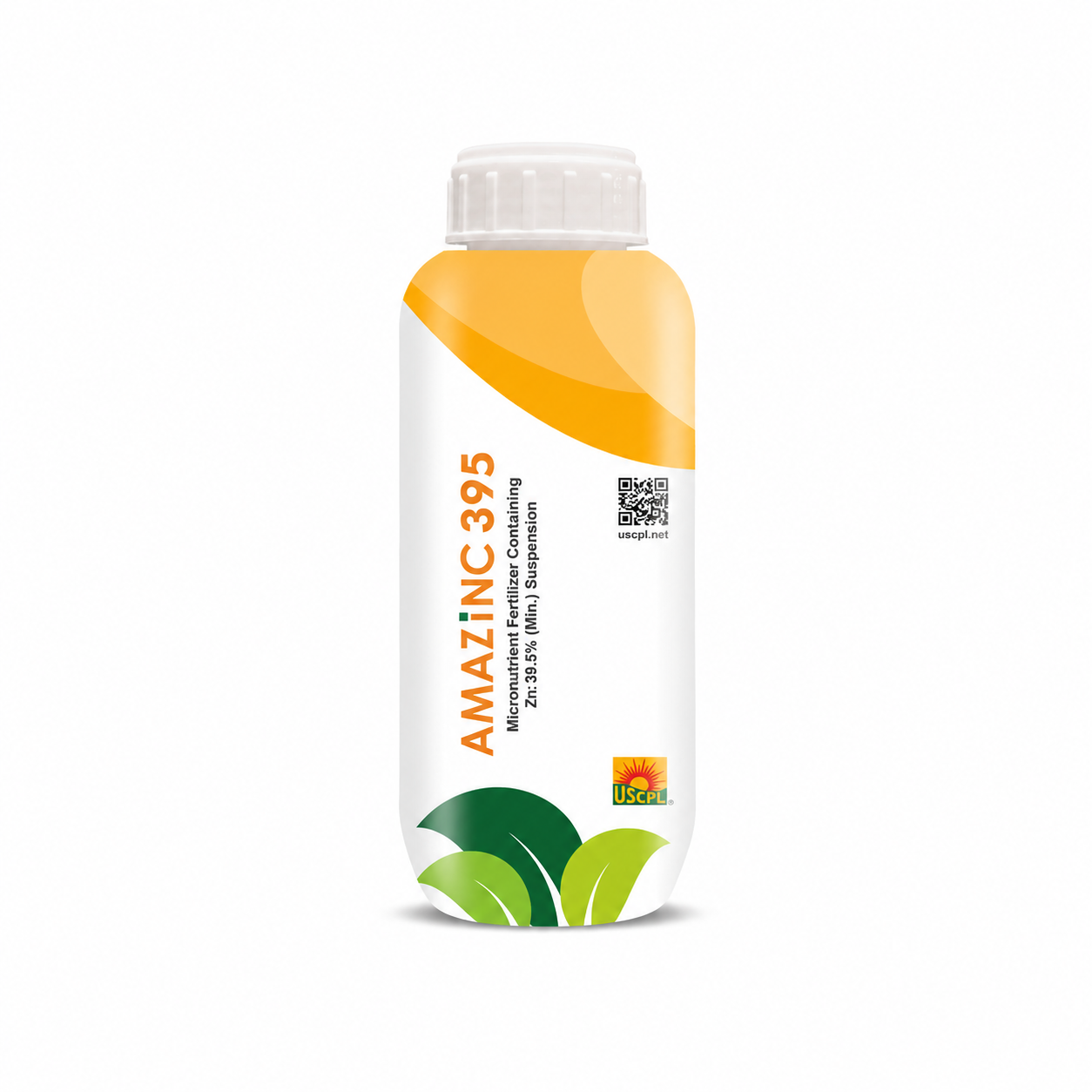
At the same time, several modern formulations are providing growers with comparable performance while delivering better value. One such product is AMAZiNC 395, a premium Zinc Oxide 39.5% SC formulation designed for efficient foliar nutrition across multiple crops.
In this guide, we'll explain:
- Recommended Yara Zintrac 700 dosage per acre
- Crop-wise application recommendations
- Best spraying practices
- Common mistakes to avoid
- Zinc deficiency management
- Comparison with AMAZiNC 395
- Frequently Asked Questions
Why Zinc is Essential for Crops
Zinc performs numerous critical physiological functions inside plants.
It is involved in:
- Chlorophyll formation
- Auxin (growth hormone) production
- Enzyme activation
- Photosynthesis
- Protein synthesis
- Root development
- Flower initiation
- Fruit setting
- Grain filling
- Seed development
Without sufficient zinc, crops cannot efficiently utilize nitrogen and phosphorus, leading to poor fertilizer use efficiency.
Symptoms of Zinc Deficiency
Common zinc deficiency symptoms include:
- Yellowing between leaf veins
- Small narrow leaves
- Short internodes
- Rosette appearance
- Poor root development
- Delayed flowering
- Reduced fruit set
- Poor grain filling
- Lower crop vigor
- Reduced yield
Deficiency is especially common in:
- High pH soils
- Calcareous soils
- Sandy soils
- Low organic matter soils
- Fields with excessive phosphorus application
Understanding YaraVita Zintrac 700
YaraVita Zintrac 700 is a highly concentrated liquid zinc fertilizer formulated for foliar application.
It is widely used in:
- Rice
- Wheat
- Cotton
- Maize
- Sugarcane
- Vegetables
- Fruits
- Pulses
- Oilseeds
Its suspension concentrate formulation helps deliver zinc directly through leaf surfaces.
Yara Zintrac 700 Dosage per Acre
The exact dosage varies depending on crop type, growth stage, and severity of deficiency.
The commonly recommended range is:
| Crop |
Recommended Dosage per Acre |
| Rice |
200–300 ml |
| Wheat |
200–300 ml |
| Cotton |
250–300 ml |
| Soybean |
200–250 ml |
| Maize |
200–300 ml |
| Sugarcane |
250–300 ml |
| Vegetables |
200–300 ml |
| Fruits |
250–500 ml |
Always follow the product label and local agronomic recommendations applicable in your region.
Water Requirement for Spraying
Typical spray volume:
- 150–200 litres water per acre
Good coverage ensures maximum nutrient absorption.
Best Time to Apply
For maximum response:
First Spray
Vegetative growth stage
Second Spray
Pre-flowering stage
Third Spray
Fruit development or grain filling stage (if required)
Multiple low-dose sprays generally perform better than a single heavy application.
Crop-wise Application Guide
Rice
Apply during active tillering.
Benefits include:
- Better tillering
- Stronger roots
- Improved grain filling
Wheat
Spray before stem elongation.
Expected benefits:
- Uniform crop growth
- Better ear development
- Higher grain weight
Cotton
Apply before flowering.
Advantages:
- Improved square retention
- Better boll formation
- Reduced flower drop
Maize
Spray at 4–8 leaf stage.
Benefits:
- Faster growth
- Improved cob development
- Better nutrient utilization
Vegetables
Suitable for:
- Tomato
- Chilli
- Brinjal
- Okra
- Cucumber
- Onion
- Cabbage
Benefits:
- Better flowering
- Improved fruit setting
- Uniform fruit size
Fruit Crops
Suitable for:
- Mango
- Citrus
- Grapes
- Pomegranate
- Banana
Advantages:
- Improved flowering
- Reduced fruit drop
- Better fruit quality
Mixing Instructions
When preparing spray solution:
- Fill tank halfway with water.
- Add measured quantity of product.
- Maintain agitation.
- Add remaining water.
- Spray immediately.
Avoid mixing with strongly alkaline products unless compatibility has been confirmed.
Factors Affecting Zinc Uptake
Several factors influence zinc efficiency:
Water pH
Ideal range:
pH 5.5–6.5
Spray Timing
Best spraying time:
Avoid hot afternoon conditions.
Weather
Avoid spraying:
- During rain
- Before heavy irrigation
- During strong winds
Leaf Coverage
Uniform leaf coverage significantly improves absorption.
Common Application Mistakes
Farmers often reduce zinc efficiency by:
- Overdosing
- Spraying during midday heat
- Using dirty water
- Poor spray calibration
- Mixing incompatible pesticides
- Delaying application after deficiency appears
Preventing these mistakes improves crop response.
Why Many Farmers Look for Alternatives
Although YaraVita Zintrac 700 is well known, growers increasingly compare it with newer High Performance Liquid Fertilizers due to:
- Product availability
- Cost considerations
- Local technical support
- Crop-specific performance
- Value per acre
This has increased interest in products like AMAZiNC 395.
AMAZiNC 395 is a premium Zinc Oxide 39.5% liquid zinc fertilizer formulated as a high-quality suspension concentrate for foliar nutrition.
It is designed to provide:
- High zinc concentration
- Excellent suspension stability
- Efficient foliar absorption
- Uniform spraying
- Easy tank mixing (subject to compatibility testing)
It belongs to the new generation of Liquid Zinc micronutrient products developed for modern agriculture.
High concentration helps supply essential zinc efficiently.
Excellent Suspension Stability
Uniform particle dispersion reduces settling during spraying.
Better Leaf Coverage
Fine suspension promotes even distribution over foliage.
Suitable for Multiple Crops
Recommended across cereals, pulses, oilseeds, vegetables, fruits, plantation crops, and horticultural crops.
Modern Foliar Nutrition
Supports balanced micronutrient management in intensive farming systems.
AMAZiNC 395 vs YaraVita Zintrac 700
| Feature |
YaraVita Zintrac 700 |
AMAZiNC 395 |
| Form |
Liquid Zinc |
Zinc Oxide 39.5% SC |
| Category |
Liquid Zinc micronutrient |
High Performance Liquid Fertilizer |
| Foliar Application |
Yes |
Yes |
| Crop Suitability |
Multiple crops |
Multiple crops |
| Suspension Technology |
Yes |
Yes |
| Modern SC Formulation |
Yes |
Yes |
| Alternative Option |
Established product |
High-value alternative |
Rather than focusing only on brand recognition, growers should evaluate:
- Nutrient concentration
- Application efficiency
- Product consistency
- Technical support
- Cost per acre
- Overall return on investment
How AMAZiNC 395 Fits Modern Farming
Today's growers require fertilizers that support:
- Precision nutrition
- Reduced nutrient losses
- Better foliar efficiency
- Uniform crop growth
- Higher profitability
AMAZiNC 395 has been developed keeping these objectives in mind, making it an attractive option for farmers seeking a dependable Liquid Fertilizer solution for zinc nutrition.
How Does AMAZiNC 395 Compare with Other Zinc Fertilizers?
Besides YaraVita Zintrac 700, farmers often compare products such as:
- Omex Zinc
- Tradecorp Zinc
- Van Iperen Zinc
Each brand has its own formulation and positioning. The best choice depends on:
- Crop type
- Local soil conditions
- Agronomic recommendations
- Product availability
- Cost-effectiveness
- Technical guidance
AMAZiNC 395 stands out as a strong option in the Zn Oxide 39.5% category by combining high zinc concentration with a suspension concentrate formulation suitable for modern foliar nutrition.
Best Practices for Zinc Management
To maximize zinc efficiency:
- Conduct soil testing regularly.
- Monitor crop deficiency symptoms.
- Apply zinc preventively where deficiencies are common.
- Follow recommended spray intervals.
- Use clean water.
- Calibrate sprayers properly.
- Ensure complete leaf coverage.
- Integrate micronutrients with balanced NPK nutrition.
Frequently Asked Questions
What is the recommended Yara Zintrac 700 dosage per acre?
The dosage generally falls in the range of 200–300 ml per acre for many field crops, while some fruit crops may require higher rates depending on crop stage and deficiency level. Always follow the product label and local recommendations.
Can zinc be mixed with pesticides?
Many foliar zinc products can be tank-mixed with compatible crop protection products. However, always conduct a jar compatibility test before large-scale mixing.
How many sprays are required?
Most crops benefit from 2–3 foliar sprays during key growth stages.
What is the best time for zinc spraying?
Early morning or late afternoon provides the best conditions for foliar absorption.
Which crops respond best to zinc?
Rice, wheat, maize, cotton, soybean, onion, tomato, chilli, grapes, banana, citrus, pomegranate, and many vegetable crops respond well to zinc nutrition.
Is AMAZiNC 395 suitable for foliar application?
Yes. AMAZiNC 395 is formulated as a Zinc Oxide 39.5% SC formulation intended for efficient foliar application across a wide range of crops.
Conclusion
Understanding the correct Yara Zintrac 700 dosage per acre is essential for maximizing the benefits of zinc nutrition. Applying the right quantity at the right crop stage, using proper spray techniques, and integrating zinc into a balanced nutrient management program can significantly improve crop growth, flowering, fruit setting, and yield.
While YaraVita Zintrac 700 remains a recognized product in the market, many growers are also exploring modern alternatives that provide strong performance and value. AMAZiNC 395, with its Zinc Oxide 39.5% liquid zinc fertilizer formulation, offers an excellent option for farmers seeking a reliable Liquid Zinc micronutrient solution. Its advanced suspension concentrate technology, broad crop suitability, and focus on efficient foliar nutrition make it a compelling choice alongside other well-known brands such as Omex Zinc, Tradecorp Zinc, and Van Iperen Zinc.
Ultimately, the most effective zinc program is one that combines the right product, the correct dosage, timely application, and sound agronomic practices to achieve healthier crops and improved farm profitability.